

When I want to test a new system, I start the research with the character creation and combat system, so I make a fighter character. If there are no classes or archetypes, I choose a pack of fighter skills and feats, or whatever uses the system.
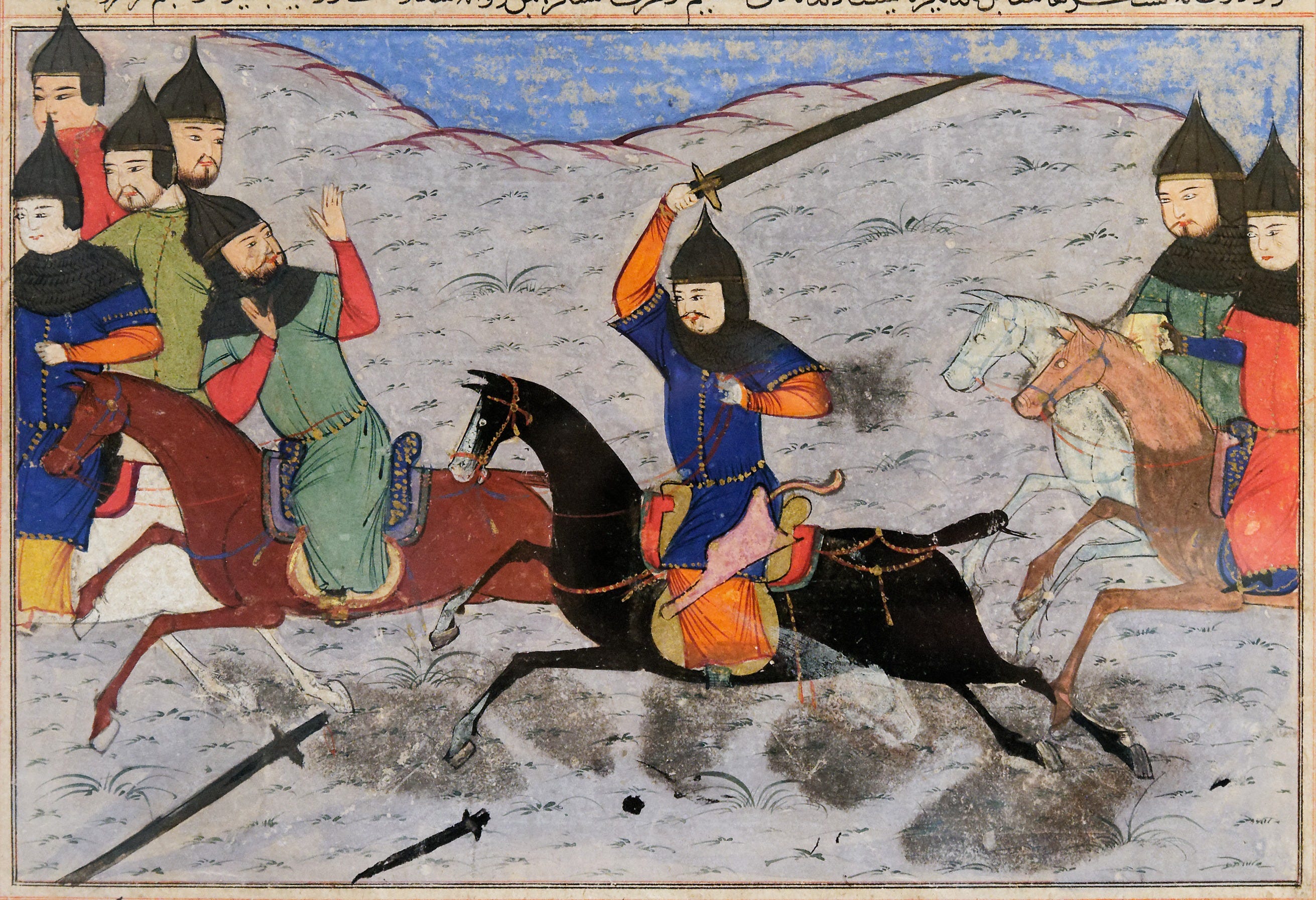
I did it the last two times; Shamu is my test character. 2 years ago, we tested an unknown and not-too-interesting D20 system, but this RPG had a human race: It is the prehistoric man. It is the best choice for a dumb and meaningless character who can not communicate, and only battle is his language and lifestyle. So the starting point was the regular dnd fighter. The campaign was fun and interesting, telling the truth not because of the system; I think we brought life into the play.
I developed the character into a proud tribeman who serves his master well, and it became more than a dumb killer. So I converted him into a better system, which is a Conan RPG (ZeFRS) spinoff, in an interesting setting. (I will tell you more details later.) So in this campaign, Shamu is an outcast who loves his motherland, but he must live outside and Shamu must do things, and the things are not noble acts sometimes. You know.
Ok, so in this context my fighter is more sophisticated than the earlier one. We escorted a young girl and saved her from an unwanted marriage. Then we looted a tomb with new bandit allies, and in the last story we solved a mass crime in a decadent city. So my character developed with detailed personality traits.
In the character level, in the numbers level, Shamu is still a dumb fighter; the fun factor was the play and the decisions, what I made with him.
So I did some research on how I can lift the play higher with the fighter characters. Enjoy the tour!
“The fighter is the boring class” is close to a founding myth of the hobby at this point — no spells, no special die-rolling subsystem, just a sword and a number that goes up. But the OSR blogosphere has spent years pushing back on that premise from two directions at once: some bloggers argue the fighter never needed fixing in the first place, and others have built genuinely clever fixes anyway. Here’s a tour of both camps.
Pushing back on the premise
What a horrible night to have a curse... — “I’m the greatest swordsman that ever lived!”
This post asks an obvious question nobody quite stops to answer: if fighters are the boring class, why are nine out of ten legendary heroes across myth and fiction sword-swinging warriors rather than spellcasters? The argument isn’t that the fighter’s mechanics are secretly deep — it’s that “boring” may say more about how we frame combat description than about the class sheet itself.
Why it’s here: every other post on this list assumes the fighter has a problem to solve. This one is worth reading first because it questions that assumption directly.
This blog post highlights an important topic. Most of the heroes, like Conan were fighters, they did great things with great flavor (and mojo :) ). But in the RPG, almost everybody treats the fighter as a common and mandatory, but not the favorite option in the classes. In the rest of the post, we will talk about how we can spice it up with the fluff and other levels of the play.
5 Stone Games — “How Old School Empowers Players”
A broader defense of minimalist character sheets in general: a character built from six stats, a class, and a level can feel intimidating to players raised on menu-driven option lists, but the post argues that’s exactly what hands the interesting decisions back to the player at the table instead of pre-baking them into a character sheet.
Why it’s here: it’s the clearest statement of the “the fighter’s simplicity is the feature, not the bug” position, and it explains why so many of the fixes below are deliberately lightweight rather than feat-tree-heavy.
Every minimalist system has the problem that players suffer from the lack of character feats and options. I think the GM must encourage the players, that they use their ideas, and the GM will offer roll if it is needed. If the idea is optimal, the action will be automatically successful. So if the GM treats the fighter as a hero and lets him or her make heroic acts and solve the roll question, the player can feel the classic fantasy heroic style. In this game, every character is a hero (or antihero :) ), so act like this and make decisions; don’t be afraid of failure!
Fixing it without slowing combat down
Porky’s Expanse — “Giving fighters a once-over”
Maybe the lowest-effort fix on this list: at character creation, have the fighter’s player describe their fighting philosophy, school, or preferred techniques in a few words — then let that flavor genuinely color how each attack gets described and adjudicated, no new subsystem required.
Why it’s here: it’s proof that “make the fighter interesting” doesn’t have to mean “add more rules” — sometimes it just means asking one good question at session zero.
It’s a minor fix, but it can be a good starter for a new mindset; if the GM uses this fluff, the play can be more interesting. Every successful attack can be a minor celebration. ;)
Roles, Rules, and Rolls — “One Page Class Powers: Fighter Feats from Damage Dice”
A direct critique of DCC’s well-known “Mighty Deeds of Arms” system: cool in principle, but the extra dice rolls and table lookups slow combat down rather than energizing it. The proposed fix ties fighter feats to something the fighter is already rolling anyway, so the “special move” falls out of the existing action instead of adding a new decision on top of it.
Why it’s here: it’s a rare case of a blogger naming a specific, popular published solution and explaining exactly why it doesn’t fully work at the table — useful context if you’re evaluating whether to adopt Mighty Deeds yourself.
Another example, but from the other end of the complexity scale. If you want fancy combat actions, but don’t want to create feats for it, it can be a good solution.
Roles, Rules, and Rolls — “Improving 52 Pages: Fighter and Rogue Combat Powers”
The same blogger’s later, more refined design rule: fighter powers should add effects, not decisions — bonuses and consequences that happen automatically rather than new choices the player has to stop and weigh mid-fight.
Why it’s here: this is close to a thesis statement for the whole “fix the fighter” project — a one-sentence design filter you can apply to judge any fighter house rule, including the others on this list.
This example builds feats into the core system without creating feat system.
of Pedantry — “Adjudicating Combat Maneuvers”
A response to a different, older failure mode: 3rd edition’s sprawling, situational rules for trips, disarms, and sunders, which routinely stalled the table while everyone looked up modifiers. This post proposes one unified foundation for adjudicating any combat maneuver on the fly, instead of a different subsystem for each move.
Why it’s here: it tackles the opposite risk from the “too few options” problem — a fighter fix that’s too complicated is its own kind of boring, and this post is explicitly designed to dodge that trap.
In this case, the designer wanted to solve the too many feats problem with one universal solution: If you want to make a special move, you have to roll higher than a normal hit.
Sword and Board — “Improved Fighters for S&W WhiteBox”
A concrete, small houserule: fighters pick a “profession” at character creation that grants an extra ability layered on top of the normal fighter abilities — a light customization hook without rebuilding the class from scratch.
Why it’s here: it’s the most literally “ready to steal for your table tonight” entry on this list — a small, bounded addition rather than a whole new subsystem.
Fighting styles can be a great option to advance your play with fighters; if they grant special maneuvers, that can be better. My favorite solution for the boring fighter problem, and because these are not unbalanced, I think this doesn't cause any system-related complication.
Summary
Pull these together, and the disagreement turns out to be smaller than it looks. Most of the players and GMs like the simplicity of the fighter class, it is the cornerstone of the RPG system. This class is essential, not because you need a bodyguard or damage dealer role in the party; it is because this is the baseline of the classes; every other class developed from this entity.
The blogs did not mention the proficiency; you can choose a trade for your character. So he or she can introduce himself as a smith, as a soldier, etc. These trades add more flavor and spice into the game. They can use the prof. as a skill and roll for it during play if it is relevant.
Even the bloggers defending the fighter’s simplicity aren’t against giving the class more texture — they’re against texture that costs table time. And the bloggers proposing fixes keep converging on the same design filter: additions that resolve automatically beat additions that hand the player one more decision to make before the dice even hit the table. Whether you fix the fighter or just describe it better, the goal both camps agree on is the same: make the player’s choices at the table feel like they matter, without making the fighter’s turn take longer than anyone else’s.
Shamu 1.0 was only a troll character, and the play was not the best with it, but Shamu 2.0 was even better, and it became, during the campaign, an interesting personality who encouraged me to continue adventuring. I wish you similar enjoyment of games with fighter characters.